
Accessible pipe repair, $200–$500
A burst you can point at, exposed pipe in a garden, garage or accessible wall, cut out and repaired in business hours.
A burst announces itself somewhere convenient, a ceiling stain, a soggy lawn, and hides somewhere else entirely. We isolate the water, trace the line to the actual failure, and replace the broken section properly. Then it holds a mains-pressure test before a single surface closes. Sutherland and the Shire, day or night.
The pipe generations tell the story. Sutherland’s older housing carries mid-century copper that pinholes from the inside as decades of water chemistry thin the wall; galvanised steel that rusts at every thread until a fitting surrenders; and somewhere in most renovated homes, a junction where three eras of pipework meet, original metal, nineties plastics, modern PEX, each joint a small bet that has to keep paying off. High mains pressure across parts of the Shire collects on those bets eventually.
What makes bursts genuinely tricky is that water lies about its address. It tracks along pipe exteriors, rides joists and wall plates, and surfaces downhill: a stain in the lounge from a split above the laundry. Open the ceiling at the stain and you find wet plaster and no pipe. So we do not guess: the line gets traced back to the actual failure, the failed section comes out, and the repair is pressure-tested against the mains before a single sheet of plaster goes back.


Weatherboard and brick homes from the suburb’s post-war growth still drain through original earthenware lines that crack and sag with age.
When an area went up as a single wave of building, its plumbing reaches the end of its life as a single wave too. Neighbours comparing notes about bursts in the same season are not imagining the pattern.
If houses either side of you have had pipework replaced, that is genuinely useful information about yours. It does not mean acting immediately, it means a burst in your house is a condition report rather than a surprise.
Townhouses and units around the station and Eton Street precinct load shared sewer lines with grease and wipes that older stacks struggle to pass.
The line is broadly the same as for drains: pipework serving only your lot is yours, and anything serving the building, risers, mains, common-property pipework, belongs to the owners corporation.
Where it gets argued is damage. A common-property pipe that damages your contents usually engages two policies, and the way to keep that simple is contemporaneous evidence. We document time, source and cause on the night for exactly that reason.
Stormwater sheds off the sandstone ridge fast toward the Woronora valley and the national park side, surging through older drains during heavy rain.
Sloping properties are full of retaining structures, and services frequently run behind or beneath them because that was the only route available. A leak in that position is both harder to reach and more consequential, saturated backfill is what makes retaining walls fail.
If water is showing at the base of a wall, treat it as urgent even if the volume looks trivial. The plumbing repair is minor next to what the wall costs.
The big eucalypts lining Sutherland’s older streets push roots deep into clay sewer joints in search of moisture, the suburb’s leading cause of blockages.
Not every escape of water is a burst pressure pipe. A cracked or collapsed drain leaks too, slowly, without a pressure drop, and often for months before anything shows.
The distinction matters because the repairs are different jobs at different prices. A pressure leak shows on the meter with every tap closed; a drain fault does not, and it is found with a camera rather than a listening device.
Houses plumbed from the late fifties onward largely used copper, which lasts well, often better than the fittings joining it. Compression joints and early soldered connections are usually where a seventy-year-old copper system gives way.
That is good news. Copper in sound condition with one failed joint is a small repair, and there is no case for replacing a system that is doing its job.
Sutherland is the namesake hub of Sydney’s Sutherland Shire (postcode 2232), a ridge-top suburb bordered by Kirrawee, Jannali and Loftus with the Woronora River valley falling away to its west. Mid-century homes, mature gums and sandstone ground combine to make root-blocked drains a local specialty of ours.
Mains pressure varies with elevation, and properties low on a slope frequently sit at the high end of the range. Higher standing pressure shortens the life of every fitting in the house, particularly flexible hoses under sinks and behind toilets.
If you are at the bottom of a hill and you have had more than one fitting let go, a pressure test is worth doing. A pressure-limiting valve is a small part that prevents an expensive category of failure.
A burst you can point at, exposed pipe in a garden, garage or accessible wall, cut out and repaired in business hours.
Adds careful access and tracing the water back to the real split before repair.
Locating equipment, access through concrete or excavation, or a reroute around the slab. The camera and leak gear keep the hole small.
Nights and weekends run roughly $180–$250/hr against $120–$160 in daylight, plus the call-out. Shutting the meter and waiting for morning is sometimes the smart money, we will say so.
Professional leak detection for the first hour, before anything is opened up. Cheaper than exploratory holes in three walls.
Every repair is pressure-tested before we leave, and the workmanship carries a lifetime warranty. Figures here are indicative of the 2026 Sydney market rather than a quote from us, you get your own number as a fixed price before any work starts.
Meter valve clockwise: we walk you through it on the phone, and the flood stops before the van starts. On site we isolate just the injured line when the layout allows it.
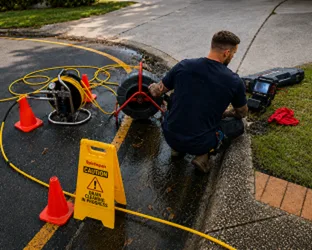
Acoustic listening, thermal imaging and section-by-section pressure testing find the actual split, which is rarely under the wet patch.

The damaged section is removed and replaced properly. If what we expose says the whole run is finished, you hear it straight, with prices for both roads.

Mains-pressure test before anything closes. The repair demonstrates itself; then, and only then, do surfaces go back.
The crisis ended when the meter closed. Call now and the repair gets planned properly, not frantically.
Traced with instruments, repaired once, proven under pressure: and priced before any of it starts.

Leave your details and our local Sutherland team will call you back fast.